
7 Proven Ways to Relieve Lower Back Pain at Home (Without Pills)
Lower back pain affects an estimated 65 million American adults — and for many, it becomes a daily limitation. The good news? Several of the most effective ways to ease it don't require a prescription or a doctor's visit. Here's what actually helps.
Why Your Lower Back Hurts in the First Place
Before treating back pain, it helps to understand where it comes from. For most people, chronic lower back discomfort isn't caused by a single dramatic injury — it builds up gradually from everyday habits: long hours sitting, poor posture, weak core muscles, age-related changes in the spine, and the natural tension that accumulates in overworked muscles.
The lumbar region (your lower back) carries much of your body's weight and is involved in nearly every movement you make. When the muscles surrounding it become tight or fatigued, or when pressure builds on the spinal discs from prolonged sitting, the result is that familiar ache, stiffness, and limited mobility.
Most lower back pain is classified as "non-specific," meaning it isn't caused by a serious underlying condition. This is actually good news — it means many cases respond well to simple, at-home approaches like heat, gentle movement, and improved posture.
7 Effective Ways to Find Relief at Home
Apply Heat Therapy
Heat is one of the most effective and underrated tools for back pain. It increases blood flow to the area, relaxes tight muscles, and soothes stiffness. Applying warmth for 20-30 minutes can significantly ease tension — especially in the evening, when the day's stress has settled into your lower back.
Keep Moving (Gently)
It's tempting to rest completely when your back hurts, but prolonged inactivity often makes stiffness worse. Gentle movement — short walks, light stretching, changing positions regularly — keeps the muscles engaged and helps prevent the area from seizing up.
Improve Your Sitting Posture
If you spend hours at a desk or on the couch, your posture matters enormously. Keep your feet flat, your lower back supported, and your screen at eye level. Taking a two-minute break every 30 minutes to stand and stretch can make a real difference over time.
Try Gentle Spinal Decompression
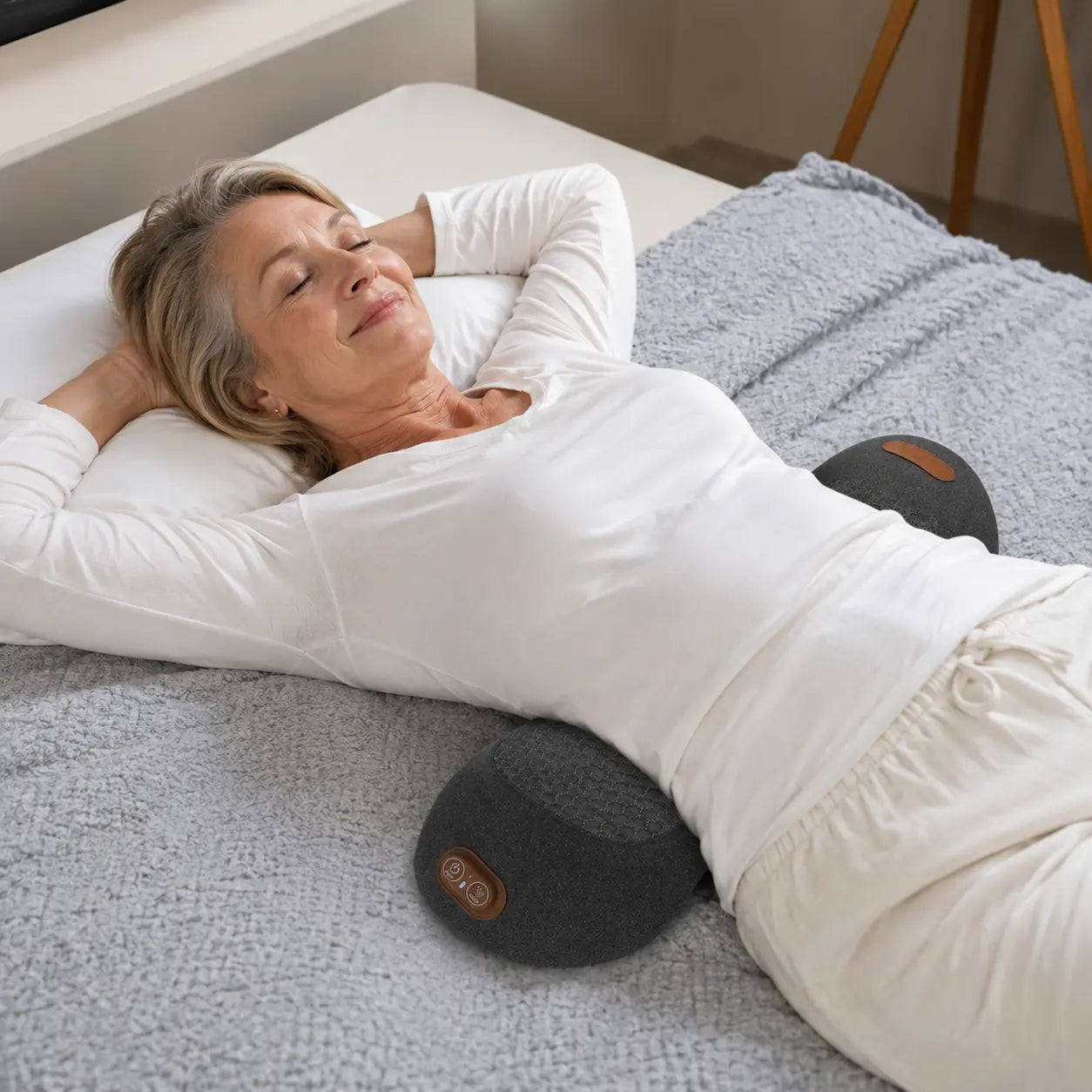
Hours of sitting and standing compress the spine throughout the day. Gentle traction — gently lengthening and decompressing the lower back — can help relieve that built-up pressure. This is a technique physical therapists use, and gentle versions can be done at home.
Strengthen Your Core
Your core muscles support your spine. When they're weak, your lower back compensates — and pays the price. Gentle core exercises like pelvic tilts, bird-dogs, and modified planks can build the support your spine needs. Start slow and stop if anything causes sharp pain.
Prioritize Sleep Quality
Poor sleep and back pain feed each other. Pain disrupts sleep, and poor sleep lowers your pain tolerance. A supportive mattress, a pillow between or under your knees, and relaxing your back muscles before bed can all improve how you feel in the morning.
Combine Heat With Massage
While heat relaxes muscles and massage relieves tension, using them together is more effective than either alone. The combination increases circulation, eases tight muscles faster, and provides more complete relief — which is exactly why many at-home relief devices now combine both.
Bringing It All Together
The most effective approach to lower back pain usually isn't one single fix — it's combining several of these methods consistently. Heat to relax muscles, gentle movement to stay mobile, better posture to prevent strain, and decompression to relieve pressure all work together.
This is the thinking behind devices like the TripleCare Lumbar Relief Pillow, which combines three of these proven approaches in one: soothing heat therapy, gentle vibration to ease muscle tension, and airbag traction for gentle spinal decompression — all in a 30-minute daily routine you can do from your couch.
While most back pain improves with at-home care, see a healthcare provider if your pain is severe, follows an injury, radiates down your legs, or is accompanied by numbness, weakness, or loss of bladder control. These can signal a condition that needs medical attention.
Three proven therapies. One simple device.
The TripleCare Lumbar Relief Pillow combines heat, vibration, and gentle traction — risk-free with a 60-day money-back guarantee.
Discover TripleCareDisclaimer: This article is for general informational purposes only and is not medical advice. The TripleCare Lumbar Relief Pillow is a wellness and comfort device and is not intended to diagnose, treat, cure, or prevent any medical condition. Always consult a qualified healthcare provider before starting any new pain-management routine, especially if you have a serious or persistent back condition.